Benefit 1
Stops the cycle of summer browning on Garland's clay soils
Please wait while we prepare your content
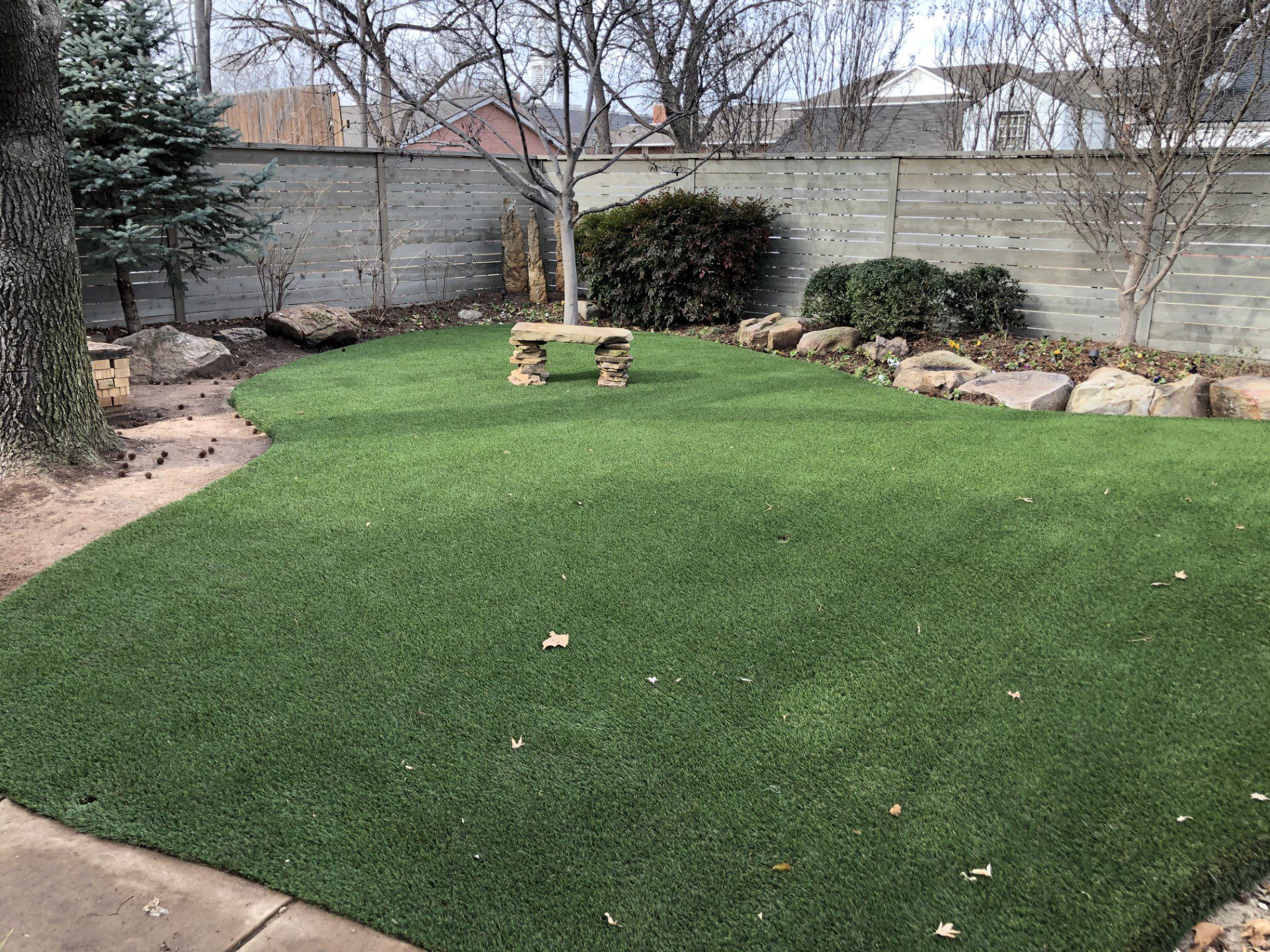
If you live in Garland — out in Spring Park, Eastern Hills, Heatherwood, or Camelot — you already know what the Texas summer does to a lawn. The Bermuda browns out. St. Augustine scorches. You water twice a week and still get bare patches by August. That is the reality for most yards east of I-635, where Garland Municipal Utilities has handed out Stage 2 watering restrictions almost every summer for years. Artificial Turf of Garland does one thing: we swap that losing battle for a synthetic grass system that stays green through July, through a drought, through two years of a dog running the same track in the back forty.
We serve the whole NE Dallas corridor — Old Downtown Garland neighborhoods off First Street, the working-class streets of Eastern Hills, the newer subdivisions in Naaman Forest and Bradfield Estates, Sachse, western Rowlett along Lake Ray Hubbard, and across into Mesquite and the Dallas Casa View pocket. Our crews speak the neighborhood because they work the neighborhood. Most of our installs start with a neighbor saying they saw another yard on their street.
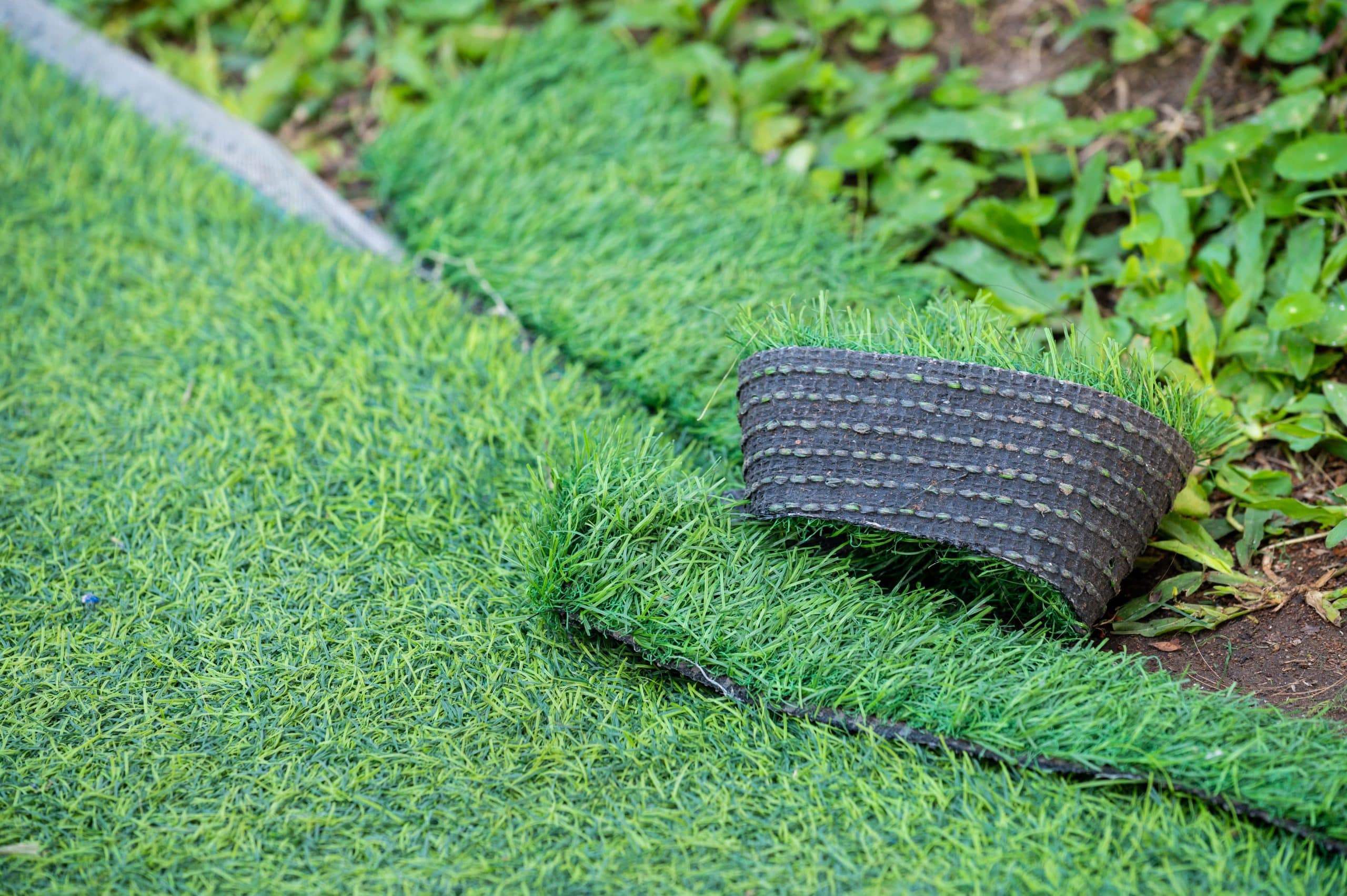
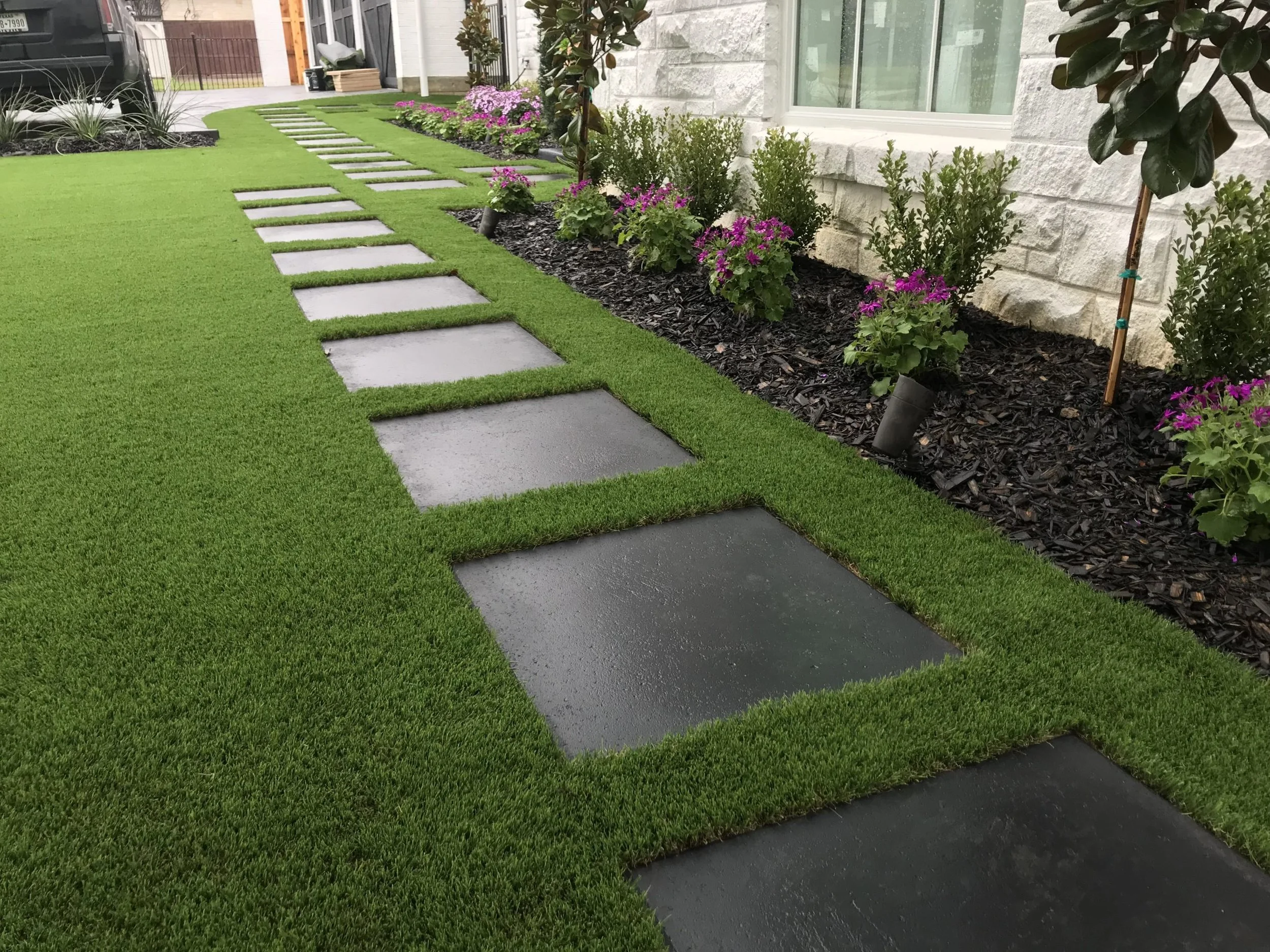
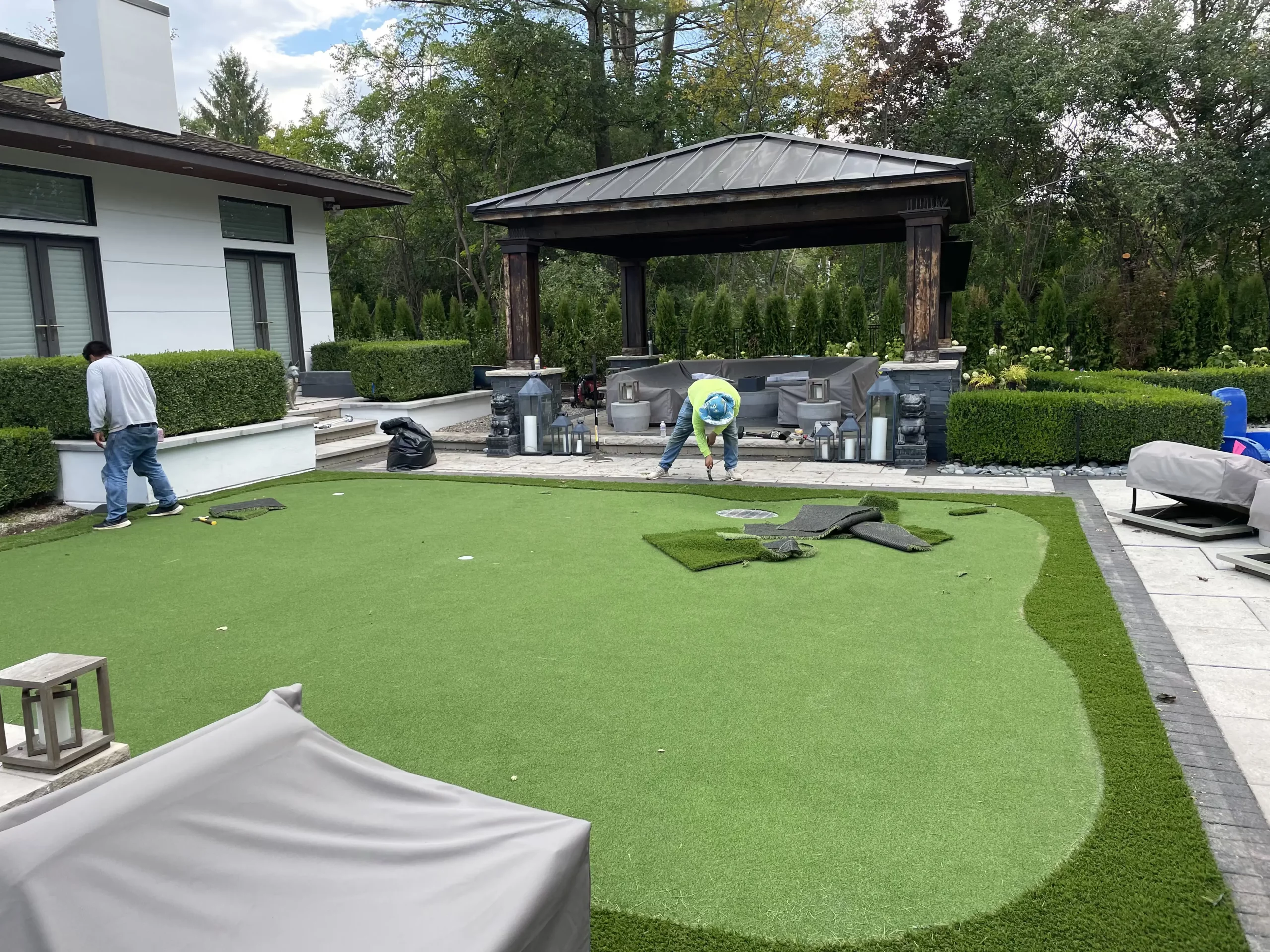
Artificial grass installation is the full job: tear out what is there, grade and compact a base of crushed granite, lay weed barrier, roll the turf, cut the edges clean, seam the joints so they disappear, add the right infill weight so blades stand up and the surface does not feel like carpet padding. We match the turf to the job — denser pile for a backyard with kids and dogs, a lower, truer roll for a putting surface, a softer residential look for a front yard on Buckner Boulevard where the neighbors all watch.
Garland sits on top of an aquifer system that feeds Lake Ray Hubbard to the east. That lake provides drinking water for millions of people in the Dallas metro. Every gallon a lawn burns in August is a gallon that did not recharge the system. The City of Garland has pushed water conservation hard over the past decade, and water utility bills have climbed accordingly. A typical quarter-acre residential lot burns 30,000 to 50,000 gallons a year on irrigation. Artificial grass cuts that to effectively zero. That is not marketing language — it is subtraction.
Beyond water, there is the time equation. The family in Heatherwood where both parents work, the kids are in GISD activities, and Saturdays are already spoken for — they are not trying to mow at 7 AM before the heat index hits 105. That is who we work for. The Vietnamese-American family near the Saigon Mall area on the Garland-Mesquite border who runs a small business six days a week and just wants the yard to look decent. The longtime homeowner in Club Hill who cannot do the heavy work anymore and will not pay someone else to do it forever. Artificial grass solves all three situations.
Stops the cycle of summer browning on Garland's clay soils
Eliminates irrigation water use — meaningful in a city under frequent watering restrictions
Removes mowing time completely — reclaim your weekends
Fill out the form and we will reply by phone or email as soon as possible.
We start with a site visit — not a phone quote, not a satellite measurement. We walk the yard with you. We check the slope, the drainage, the sun exposure, any spots where water sits after rain. Garland's clay-heavy subsoil drains slowly, and we account for that in base thickness. We give you product samples to handle — different pile heights, different blade colors, different backing weights — so you are making a real decision, not guessing from a photo.
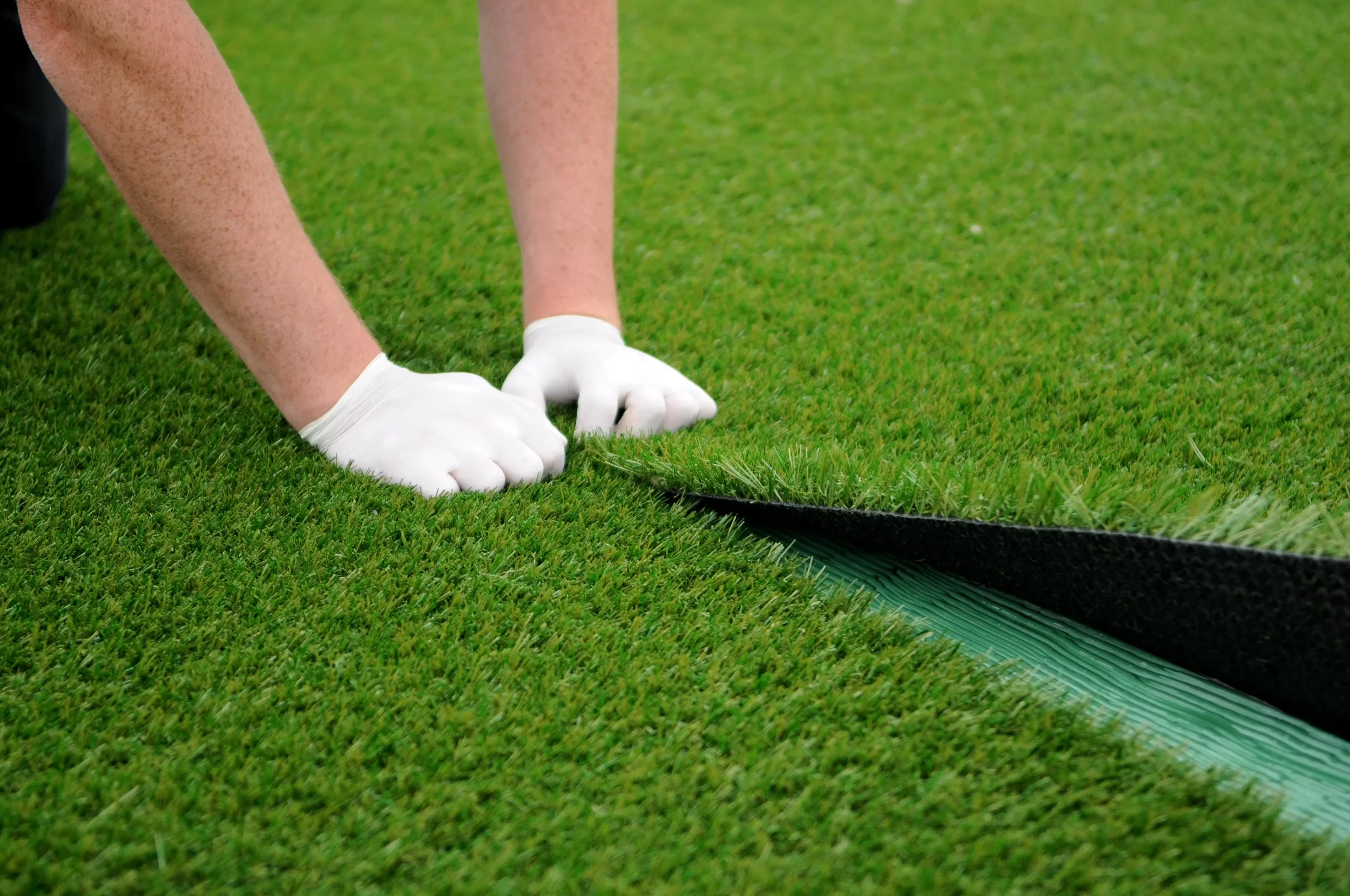
Demolition day we pull up the existing sod or dead grass, remove it off-site, and start grading. The base we install is typically 3 to 4 inches of Class II base material compacted in passes. That base is what keeps the surface stable through freeze-thaw cycles in January and through the expansion stress of Garland's clay soils in summer. We lay a commercial-grade weed barrier, then roll and cut the turf panels. Seams are glued with urethane adhesive and weighted until they cure. Infill — usually silica sand or a sand-rubber blend depending on your application — goes in by broadcast spreader and is broomed into the blades.
Final step is a walkthrough with you. We show you how to rinse, how often to brush if you have heavy pet use, where the seam locations are in case you ever need to lift a panel. Most installs run one to two days for a standard residential backyard. We clean up completely — no base material left in the driveway, no turf scraps in the flower beds.
UV-stabilized fibers built for sustained temps above 100°F in Garland summers
Compacted base engineered for Garland's expansive subsoil
Urethane-bonded joints that disappear at normal viewing distance